

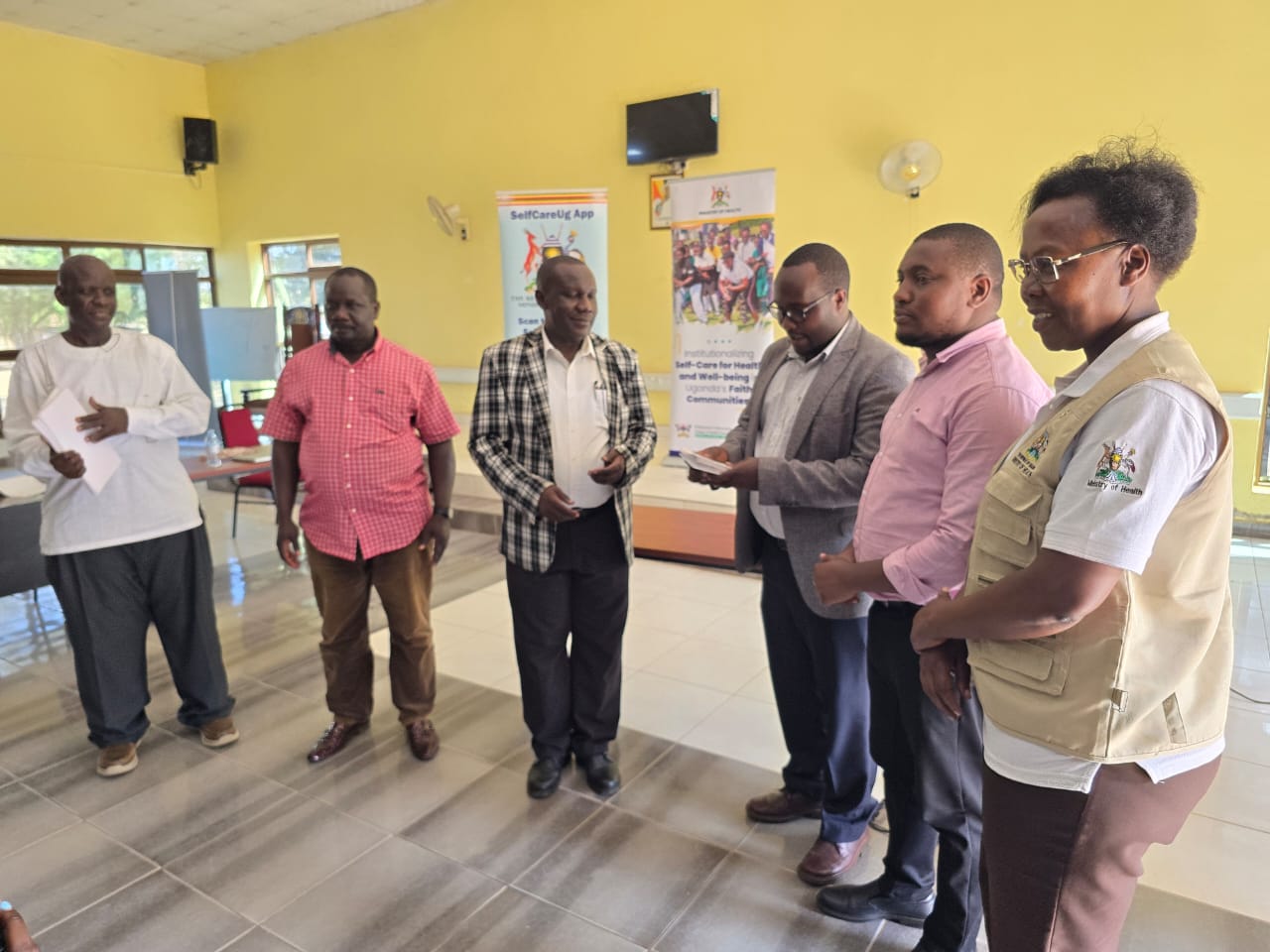
The Ministry of Health has officially rolled out the National Self-Care Interventions Program in Adjumani District, a key initiative aimed at empowering communities to take charge of their own health and wellbeing.
The launch, held at the Adjumani District Council Hall during a District Planning and Orientation Meeting, marked the first phase of implementation in one of ten districts selected nationwide, in line with the 2022 World Health Organisation (WHO) Self-Care Guidelines and Uganda’s National Self-Care Guidelines launched in 2024.
During the meeting, district health work plans were reviewed and aligned with national priorities, and District Self-Care Committees were established to oversee program implementation.
Richard Edema, Principal Assistant Chief Administrative Officer, emphasized the link between health and development.
“A healthy population is a productive population. When people take responsibility for their health, they contribute positively to development and economic growth in the district,” he said.
District Health Officer Dr Dominic Drametu urged residents to embrace healthy lifestyles and observe discipline in personal health practices.
“Eighty percent of your health is your responsibility. Eat a balanced diet, exercise regularly, and take medications as prescribed. Self-care begins with discipline,” he said.
Adjumani District Secretary for Health, John Sabuni, linked poor self-care practices to preventable deaths, including road accidents. “People must be responsible for their own safety and health,” he noted.
Resident District Commissioner Swaib Toko called on stakeholders to ensure the program is sustainable and yields long-term benefits.
“Government remains committed to providing both preventive and curative services, but the community must also embrace self-care,” he said.
The initiative targets both host communities and refugees, according to Lulu Henry Leku, District Health Officer in charge of child and maternal health, noting that the program comes at a critical time amid declining donor funding for refugee health services.
At the national level, Roselline Achola, Technical Advisor for Sexual Reproductive Health and Family Planning, said the program strengthens individual and community responsibility for health.
“Self-care interventions promote health, prevent disease, and help people cope with illness and disability, with or without direct support from health workers,” she explained.
Officials highlighted that the program is also designed to reduce pressure on health facilities by promoting preventive and community-based practices.
The launch brought together government departments, civil society, and development partners to integrate self-care interventions into district planning and implementation.
District leaders expressed optimism that the initiative will strengthen coordination among partners and improve the delivery of preventive and promotive health services across Adjumani.
